From Web Novels to Your Phone: The Chinese Content Factory Behind the Micro-Drama Boom
Web novel IP → 8-day shoot → 100 million views. The Chinese micro-drama industry runs on a ruthlessly efficient content pipeline that's unlike anything in traditional entertainment. Here's how the factory works.
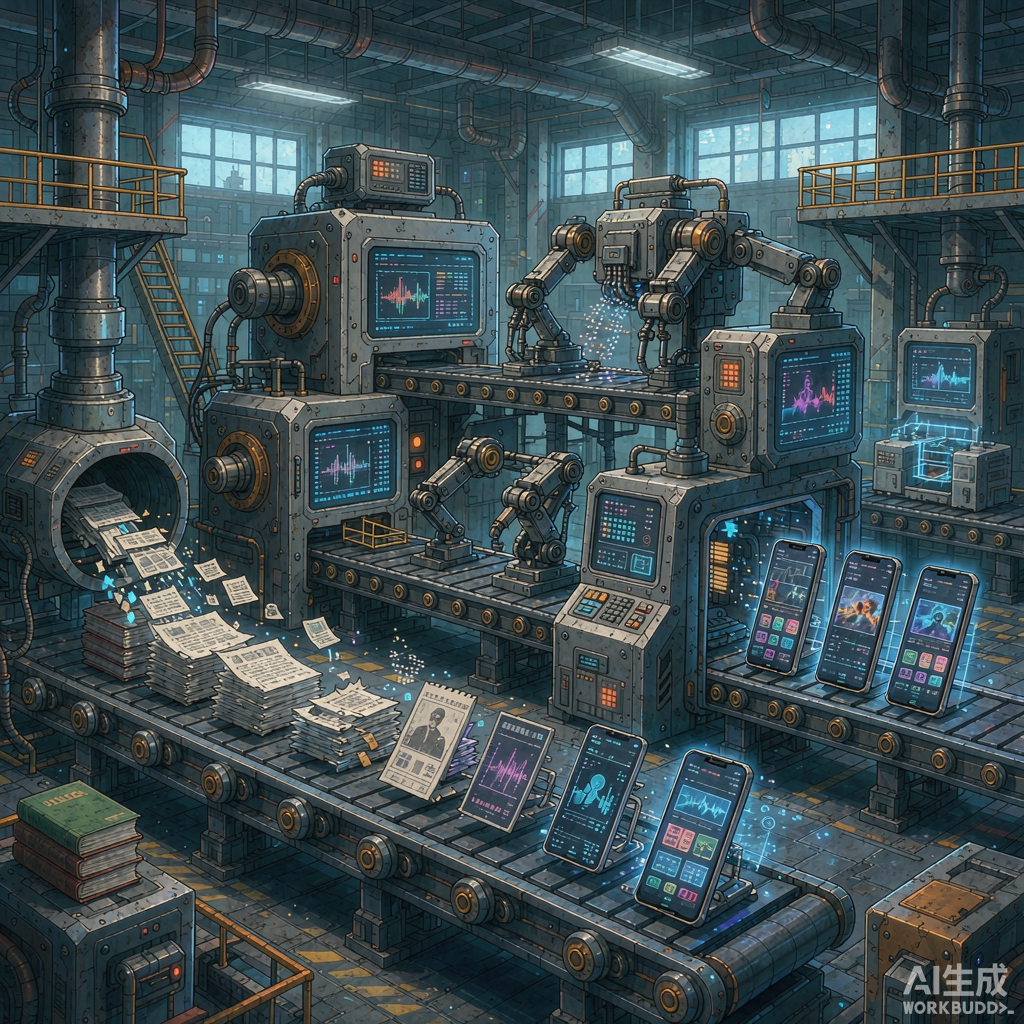
Traditional television takes years to go from concept to screen. A Chinese micro-drama can go from web novel to 100 million views in a matter of weeks. The speed is almost incomprehensible — and it's the result of a content pipeline so ruthlessly efficient that it's less like Hollywood and more like a factory assembly line.
Understanding this pipeline is key to understanding how China came to dominate the micro-drama industry, and why Western competitors are still playing catch-up. Let's trace a show's journey from web page to phone screen.
Step 1: The IP Goldmine
It starts with web novels — a massive, uniquely Chinese literary ecosystem that most Westerners have never heard of. Platforms like China Literature, Tomato Novel, and COL (China Online Literature) host millions of serialized novels, written by thousands of authors, read by hundreds of millions of users.
These aren't prestige literature. They're genre fiction at its most formulaic: billionaire romances, cultivation fantasies, revenge thrillers, all written to be addictive, all built on proven tropes. And crucially, they're all data-validated. The platforms know exactly which stories resonate, which tropes drive engagement, which character archetypes readers can't get enough of.
This is the raw material for the micro-drama industry. Why develop original IP when you have millions of pre-tested stories just waiting to be adapted?
COL is the giant here. The company provides the IP pipeline for much of the industry, claiming a 20% market share in China from the moment it entered the space. "We started this platform back in 2021," explains Timothy Oh Jia Wei, COL's general manager, "and with the IPs that we had, it became a huge, massive hit."
Step 2: Adaptation at Speed
Once a promising web novel is identified, the adaptation process begins. This is where the "factory" metaphor really kicks in.
A team of writers takes the source material and compresses it into the micro-drama format: 60-100 episodes, each 60-120 seconds, each ending on a cliffhanger. The writing process is less about crafting dialogue and more about engineering hooks — identifying the story's most addictive beats and spacing them out for maximum retention.
The writers describe the work as "reverse-engineered around data-driven formulas." Every episode must justify its existence. Every 90 seconds must end with a reason to keep watching. It's writing as puzzle-solving, and it happens fast — a full series script can be completed in days, not months.
Step 3: The 8-Day Shoot
Then comes production, and this is where the micro-drama model really diverges from traditional TV.
A 50-75 episode micro-drama shoots in 8-10 days. Total. For the entire series. Crews work at a pace that would make a network TV production dizzy — burning through as many as 20 script pages a day, compared to the 4-5 pages a day that's typical in traditional television.
The secret is in the format's constraints. Vertical frame means simple compositions — no complex blocking, no elaborate camera moves. The tight focus on faces means minimal set design. The short episodes mean actors can deliver their lines in quick, energetic bursts rather than long, nuanced takes.
The budgets match the pace: $100,000 to $300,000 for a full series, compared to $2-4 million for a single episode of a network sitcom. As one producer put it, "We're doing a full feature in eight to 10 days."
Step 4: Data-Driven Iteration
Here's where the Chinese model gets really interesting. After a show launches, the data starts flowing in immediately: completion rates, drop-off points, engagement metrics, coin-purchase patterns.
The platforms use this data to optimize in near-real-time. If viewers are dropping off at episode 15, the platform can push a re-edited version. If a particular storyline is driving engagement, they can commission more content in that vein. If a show is underperforming, they can test multiple endings to see which one resonates.
This is possible because of the speed of production. A traditional TV show is locked in once it airs. A micro-drama can be adjusted, re-cut, even re-shot if necessary, because the production cycle is so fast and cheap.
Step 5: Distribution and Monetization
Finally, the show hits the platforms — Douyin, Kuaishou, WeChat Video Accounts in China; ReelShort, DramaBox overseas. The distribution is tightly integrated with the monetization: free episodes to hook viewers, coin paywalls to monetize investment, push notifications to drive daily engagement.
The Chinese platforms have an additional advantage: integration with their parent companies' ecosystems. A Douyin user can discover a micro-drama in their feed, watch it, and pay for coins without ever leaving the app. The friction is almost zero.
Why the West Is Playing Catch-Up
The Chinese content factory works because every element is optimized for speed and efficiency: pre-validated IP, rapid adaptation, fast production, data-driven iteration, integrated distribution. It's a complete system, and it's taken years to build.
Western competitors are trying to replicate it, but they're starting from behind. They don't have the web-novel IP pipeline. They don't have the production infrastructure for 8-day shoots. They don't have the data from millions of Chinese users telling them what works.
ReelShort and DramaBox have succeeded by importing the Chinese model wholesale — Chinese production expertise, Chinese storytelling formulas, Chinese business practices — and localizing the output with Western actors and settings. It's a smart strategy, but it's still fundamentally dependent on the Chinese content factory.
The Future: Can the Factory Scale?
The question now is whether this model can scale globally. Can the Chinese content factory produce enough shows, fast enough, to feed the insatiable demand? Can it maintain quality while increasing quantity? And can Western competitors build their own pipelines before the Chinese advantage becomes insurmountable?
The answers will determine the future of the industry. For now, though, one thing is clear: the Chinese content factory is the engine driving the micro-drama boom, and it shows no signs of slowing down.
More in Industry

What Are Chinese Short Dramas? A Complete Beginner's Guide to Vertical Micro-Dramas
They're 90 seconds long, shot vertically, and powered by cliffhangers — and they've quietly become a multi-billion-dollar industry. Here's everything you need to know about Chinese short dramas, from how they work to why your brain can't resist them.

The $26 Billion Question: How Micro-Dramas Became Entertainment's Fastest-Growing Sector
From $1.4 billion in 2024 to a projected $26 billion by 2030. The micro-drama industry is growing faster than almost any entertainment sector in history. Here's the data behind the boom — and what it means for the future of storytelling.

ReelShort vs DramaBox: The Duopoly Fighting for Your Commute
One prioritized scale, the other profitability. ReelShort and DramaBox control over half the overseas micro-drama market — but they're playing very different games. Here's how the two giants compare, and which model is winning.