What Are Chinese Short Dramas? A Complete Beginner's Guide to Vertical Micro-Dramas
They're 90 seconds long, shot vertically, and powered by cliffhangers — and they've quietly become a multi-billion-dollar industry. Here's everything you need to know about Chinese short dramas, from how they work to why your brain can't resist them.
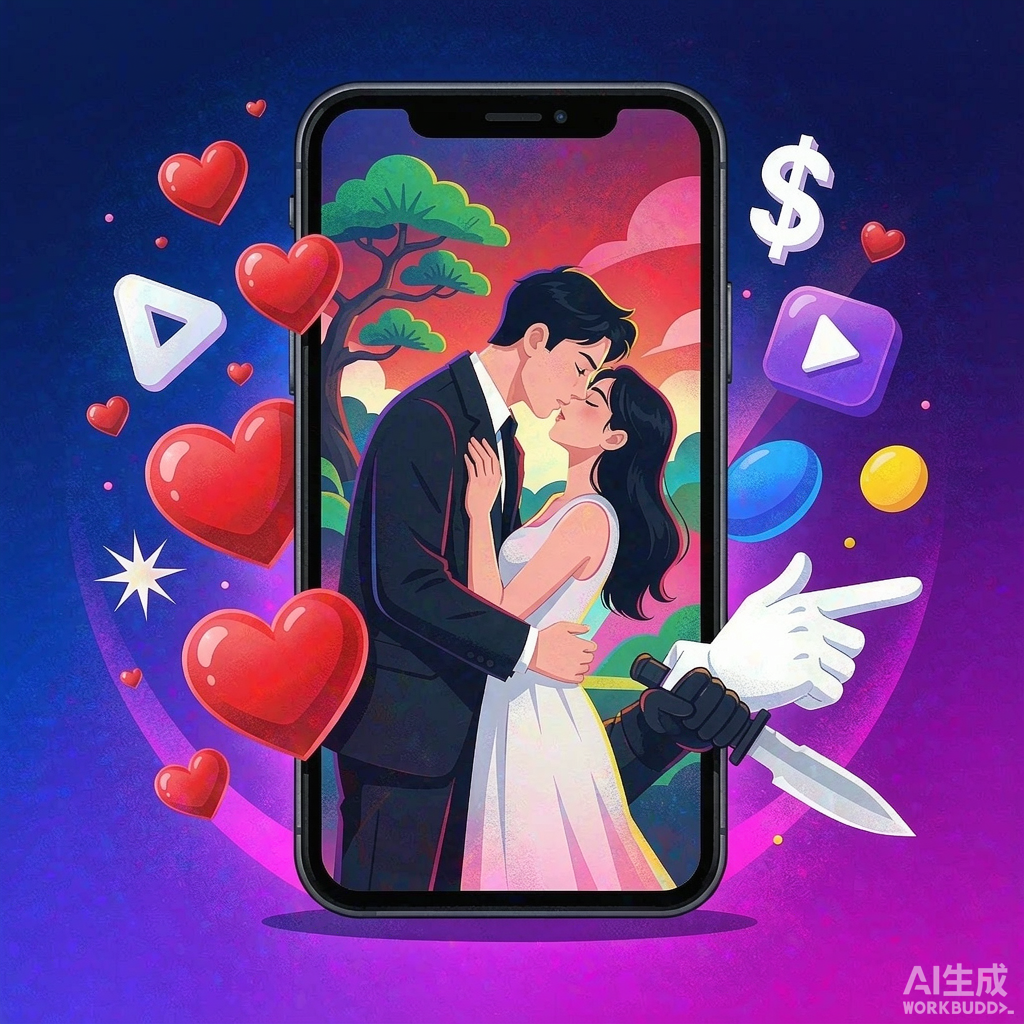
If you've spent any time on TikTok in the past two years, you've probably seen them: impossibly dramatic clips of secret billionaires, vengeful heiresses, and contract marriages, all shot vertically, all ending on cliffhangers so shameless they'd make a soap opera blush. Welcome to the world of Chinese short dramas — also called vertical dramas, mini dramas, or micro-dramas — the fastest-growing entertainment format you've probably never heard of.
They're also a genuinely big deal. What started as a quirky experiment in China has exploded into a global industry worth billions, one that's poaching viewers from Netflix, baffling Hollywood executives, and quietly rewiring how a generation consumes stories. So let's break it down: what exactly are these things, where did they come from, and why can't millions of people stop watching?
The Basics: Short, Vertical, and Engineered for Addiction
A Chinese short drama is a serialized show built from the ground up for your phone. Three things define the format:
1. They're vertical. Shot in a 9:16 portrait frame — the same shape as your phone screen. This isn't an accident or a budget limitation; it's a deliberate choice. The vertical frame means tight close-ups, faces filling the screen, and an intimacy that widescreen TV can't match. There's no wasted space, no sweeping establishing shots. Just faces, emotions, and drama, optimized for one-handed viewing.
2. Episodes are tiny. Most run between 60 and 120 seconds. A full series might have 60 to 100 episodes, but the total runtime often adds up to about the length of a feature film. The difference is in the delivery: instead of one two-hour commitment, you get a hundred two-minute hits, each ending on a cliffhanger designed to make "just one more" feel inevitable.
3. The pacing is relentless. There's no slow build, no filler, no "bottle episode." Every 90-second installment must justify its existence — usually with a revelation, a confrontation, or a twist. Writers in the format describe it as "reverse-engineered around data-driven formulas," where every episode must earn the next tap.
Where Did They Come From? A (Very) Brief History
The format was born in China around 2020-2021, incubated inside the country's massive short-video ecosystem. Platforms like Douyin (China's version of TikTok) and Kuaishou had already trained hundreds of millions of users to expect instant, vertical, mobile-first content. Short dramas were the logical next step: take the production values of television, compress them into the shape of a TikTok video, and serialize the result.
The business model came from mobile gaming. Early episodes are free — polished, engaging, carefully crafted to hook you. Once you're invested (usually around episode 10), the paywall appears. Want to see what happens next? That'll be a few "coins," purchased with real money. It's freemium storytelling, and it works frighteningly well. Users routinely spend $20 a week or more unlocking episodes, one cliffhanger at a time.
By 2024, the Chinese short-drama market alone was worth an estimated $7 billion. Then it went global.
The Global Takeover: ReelShort, DramaBox, and the American Invasion
The export happened faster than anyone predicted. In 2022, a company called Crazy Maple Studio (backed by Chinese online-literature giant COL) launched ReelShort, taking the Chinese playbook — vertical format, coin-based unlocks, addictive tropes — and localizing it for Western audiences with American actors and settings.
It worked almost immediately. ReelShort briefly topped the U.S. App Store entertainment charts, ahead of Netflix and TikTok. Its chief rival, DramaBox (operated by StoryMatrix), followed a similar path, growing from $8 million in revenue in 2023 to $217 million in 2024. Together, these two apps now dominate the international market, with tens of millions of monthly active users — about 70% of them women, concentrated in the 30-to-60 age range.
The global short-drama market hit roughly $1.4 billion in 2024 and is forecast to reach $9.5 billion by 2030. Some analysts project the broader micro-drama sector could hit $26 billion by the end of the decade. To put that in perspective: this "niche" format is on track to rival the global box office.
Why Your Brain Loves Them (Even If You Won't Admit It)
The appeal isn't mysterious once you understand the psychology. Short dramas are precision-engineered for the way modern attention works:
Instant gratification. The fantasy — billionaire, revenge, forbidden love — is established in the first 90 seconds. No waiting.
Constant cliffhangers. Every episode ends on a hook, exploiting what psychologists call the "Zeigarnik effect": our brains hate unfinished business and will go to great lengths to resolve it.
Low commitment, high reward. Each episode costs you almost nothing — 90 seconds, one hand, zero brainpower. But each delivers a full emotional beat. It's the narrative equivalent of a slot machine: small bet, frequent payout.
Snacks, not meals. You can watch an entire arc on your commute, in line at the store, or in bed. As one industry observer put it, "form is currently beating content" — the delivery matters more than the depth, because it fits perfectly into the fragmented gaps of modern life.
The Tropes You'll See Everywhere
Spend five minutes on any short-drama app and you'll notice the stories are... familiar. That's by design. These shows run on a handful of high-voltage tropes, each one a proven dopamine trigger:
- The Secret Billionaire: He's rich. She doesn't know. You do. The tension is exquisite.
- Contract Marriage: A fake relationship that becomes real, usually involving a wealthy CEO and a woman who "isn't like other girls."
- Revenge & Rebirth: Betrayed heroine gets a second chance (sometimes literally, via reincarnation) to destroy her enemies.
- Hidden Identity: She's actually a lost heiress / secret genius / undercover boss.
- Forbidden Love: Werewolves, mafiosos, step-siblings — the more taboo, the better.
These aren't bugs; they're features. The familiarity is the point. You don't watch a short drama for surprises about what will happen. You watch for the visceral, uncomplicated pleasure of watching it happen exactly the way you hoped.
Are They... Good? An Honest Answer
Let's not pretend these are prestige television. The acting is often broad, the plots defy logic, and the production values range from "surprisingly decent" to "filmed in someone's Airbnb over a weekend."
But that's also missing the point. Short dramas aren't competing with The Crown. They're competing with scrolling. And by that measure, they're a marvel of efficiency — pure narrative id, stripped of everything except the parts that make you feel something. They're soap operas for the TikTok era, romance novels you can mainline, proof that storytelling doesn't need to be slow to be effective.
How to Start Watching
Curious? The barrier to entry is almost zero. Download ReelShort or DramaBox (both free, iOS and Android), and the first episodes of any show are free to watch. Start with a popular title — The Double Life of My Billionaire Husband is the genre's defining hit — and see if the hook catches you. Just be warned: the coins add up fast, and "just one more episode" is how they get you.
The short-drama revolution isn't coming. It's already here, it's already enormous, and it's already in your pocket. The only question is whether you'll give it 90 seconds to prove itself.
Welcome to PlotBite. We decode the world of vertical dramas so you don't have to fall down the rabbit hole alone. Check out our reviews for your first show, or read our industry analysis to understand the billion-dollar machine behind the madness.
More in Industry

The $26 Billion Question: How Micro-Dramas Became Entertainment's Fastest-Growing Sector
From $1.4 billion in 2024 to a projected $26 billion by 2030. The micro-drama industry is growing faster than almost any entertainment sector in history. Here's the data behind the boom — and what it means for the future of storytelling.
ReelShort vs DramaBox: The Duopoly Fighting for Your Commute
One prioritized scale, the other profitability. ReelShort and DramaBox control over half the overseas micro-drama market — but they're playing very different games. Here's how the two giants compare, and which model is winning.
Why Are Americans Paying $20/Week for 90-Second Episodes? The Psychology of Micro-Drama Addiction
U.S. consumers spend hundreds of millions annually on micro-drama apps, often $20+ per week on coins. What's driving this willingness to pay for 90-second episodes? The answer lies in a carefully engineered addiction machine.