AI Is About to Flood Your Feed with 10,000 New Dramas a Month
Platforms are already pumping out over 10,000 AI-generated micro-dramas every month. Production costs drop to one-tenth, turnaround shrinks from weeks to days. Is this the future of entertainment — or the death of it?
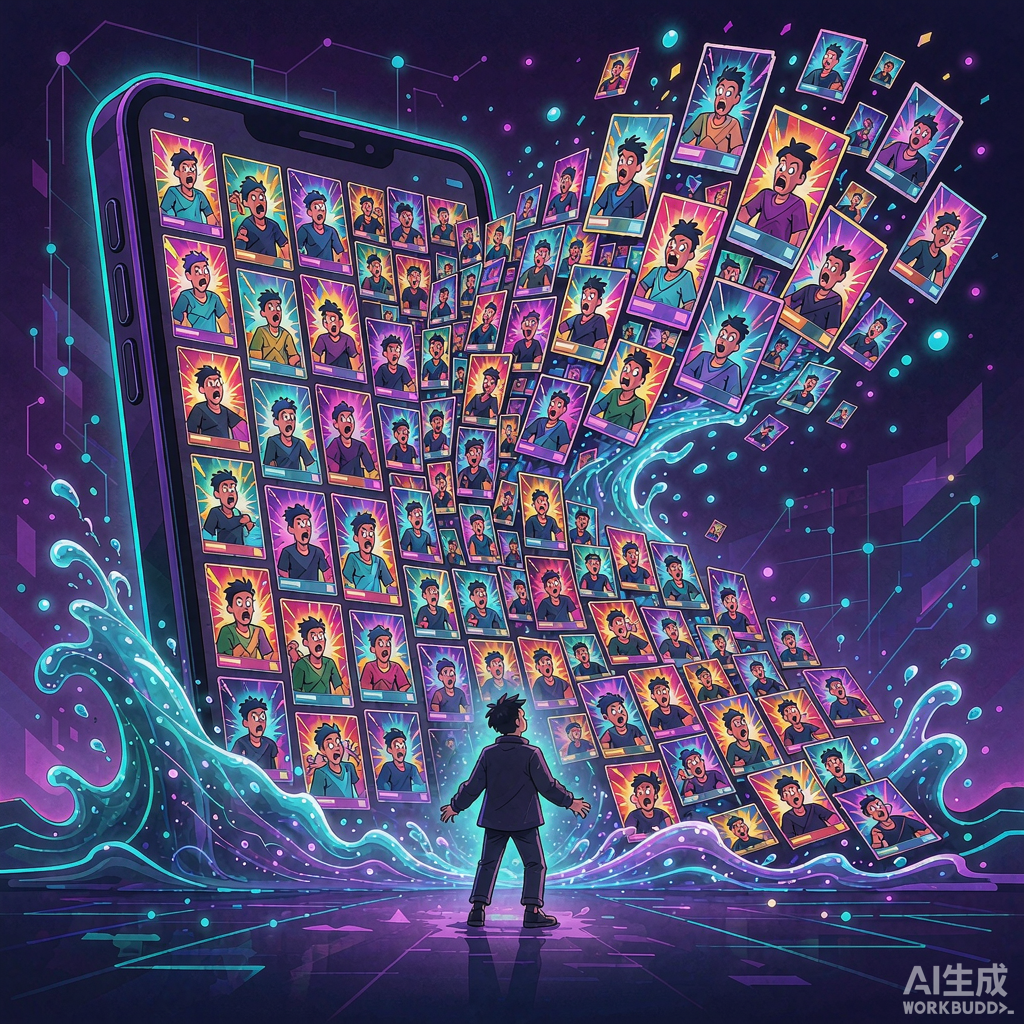
Since late 2025, something remarkable and slightly terrifying has been happening in the micro-drama industry: AI-generated content has exploded. Platforms are now producing over 10,000 new AI titles every single month. Production costs have dropped to one-tenth of traditional shoots. Turnaround time has shrunk from weeks to days.
The vertical-drama format, it turns out, is the perfect testing ground for AI-generated entertainment. And the implications — for the industry, for creators, for viewers — are enormous.
Why Vertical Dramas Are Perfect for AI
Not all content is equally suited to AI generation. A prestige drama with complex cinematography and nuanced performances? Still years away. But a vertical micro-drama? That's a different story.
The format's constraints work in AI's favor:
Simple visuals. Vertical dramas are shot in tight close-ups, faces filling the frame. There's no complex blocking, no elaborate set pieces, no sweeping establishing shots. This is exactly the kind of content current AI video tools can handle.
Formulaic storytelling. Micro-dramas run on proven tropes and data-driven formulas. The stories are structured, predictable, algorithmic — which makes them ideal for AI generation. You don't need an AI to write the next great American novel. You need it to write "secret billionaire, episode 47, cliffhanger ending." That's doable.
Short length. At 60-120 seconds per episode, the content is bite-sized enough that AI's current limitations (uncanny valley faces, occasional glitches, limited emotional range) are less noticeable.
Data abundance. The industry has millions of hours of existing micro-dramas to train on, providing AI with a massive dataset of proven formulas.
The Economics Are Insane
The cost savings are staggering. A traditional micro-drama costs $100,000 to $300,000 for a 50-75 episode series and takes 8-10 days to shoot. An AI-generated micro-drama can cost one-tenth of that — $10,000 to $30,000 — and be produced in a fraction of the time.
This changes the entire economics of the industry. Suddenly, platforms can experiment with hundreds of concepts quickly, iterate based on real-time data, and flood the market with fresh content. The barrier to entry drops to nearly zero.
The 10,000-a-Month Flood
And flood the market they have. Over 10,000 new AI titles are being produced every month, according to industry reports. That's not a typo. Ten thousand.
To put that in perspective: the entire traditional television industry produces a few hundred new series per year. The AI micro-drama industry is producing that volume in a matter of days.
The content is... variable. Some of it is surprisingly decent — formulaic but competent, the kind of thing you can mindlessly binge on a commute. Some of it is uncanny-valley nightmare fuel. Most of it is somewhere in between: watchable, forgettable, algorithmically optimized for engagement.
What This Means for Creators
For writers, actors, and production crews, the AI flood is an existential threat. If a platform can produce a serviceable micro-drama for $10,000 instead of $100,000, why would it hire humans?
The optimistic take: AI will handle the low-end, formulaic content, freeing human creators to focus on higher-quality, more innovative work. The pessimistic take: the low-end is where most of the industry's jobs are, and those jobs are about to disappear.
The reality is probably somewhere in between. AI will displace some jobs, but it will also create new ones (prompt engineering, AI supervision, quality control). The transition will be painful, but it's not necessarily apocalyptic.
What This Means for Viewers
For viewers, the AI flood is a mixed blessing. On the one hand: more content than you could ever watch, personalized to your tastes, available instantly. On the other hand: a firehose of algorithmically generated content that may lack the human touch that makes stories resonate.
There's also a discovery problem. When there are 10,000 new titles a month, how do you find the good ones? The platforms' recommendation algorithms will become even more important — which gives them even more power over what you watch.
And there's a quality question. AI can replicate formulas, but can it create something genuinely new? Can it surprise you, move you, make you think? The jury is still out.
The Regulatory Question
The AI flood is also attracting regulatory attention. Concerns about deepfakes, consent (are the AI-generated faces based on real people?), and content quality are all being raised. Some jurisdictions are considering disclosure requirements — mandating that AI-generated content be labeled as such.
The industry is lobbying hard against heavy-handed regulation, arguing that it will stifle innovation. The regulators are skeptical. This battle is just beginning.
The Future: Personalized, Algorithm-Driven Stories
Looking further ahead, the combination of AI and vertical format could enable something genuinely new: personalized, algorithm-driven stories that adapt to your preferences in real-time.
Imagine a micro-drama that changes based on your viewing history — different plot points, different character arcs, even different endings, all generated on the fly to maximize your engagement. It's the logical endpoint of the data-driven approach the industry is already taking.
Is that exciting or dystopian? Probably both. But it's coming, whether we're ready or not.
The Bottom Line
AI is flooding the micro-drama market with content at an unprecedented scale. The economics are too compelling for platforms to ignore, and the technology is improving fast. This is not a trend that can be stopped — only managed.
The question is what we want the future of entertainment to look like. Do we want a world of infinite, personalized, AI-generated content? Or do we want to preserve a space for human creativity, human stories, human connection?
The answer, as with most things, is probably "both." But striking that balance will require careful thought, smart regulation, and a clear-eyed understanding of what AI can and can't do.
The flood is here. Now we have to figure out how to swim.
More in Industry

What Are Chinese Short Dramas? A Complete Beginner's Guide to Vertical Micro-Dramas
They're 90 seconds long, shot vertically, and powered by cliffhangers — and they've quietly become a multi-billion-dollar industry. Here's everything you need to know about Chinese short dramas, from how they work to why your brain can't resist them.

The $26 Billion Question: How Micro-Dramas Became Entertainment's Fastest-Growing Sector
From $1.4 billion in 2024 to a projected $26 billion by 2030. The micro-drama industry is growing faster than almost any entertainment sector in history. Here's the data behind the boom — and what it means for the future of storytelling.
ReelShort vs DramaBox: The Duopoly Fighting for Your Commute
One prioritized scale, the other profitability. ReelShort and DramaBox control over half the overseas micro-drama market — but they're playing very different games. Here's how the two giants compare, and which model is winning.