Vertical vs Traditional Dramas: Why Your Brain Loves the 2-Minute Fix
Why do 90-second vertical episodes feel so much more addictive than hour-long prestige TV? The answer lies in how your brain processes attention, reward, and narrative satisfaction. Let's break down the science.
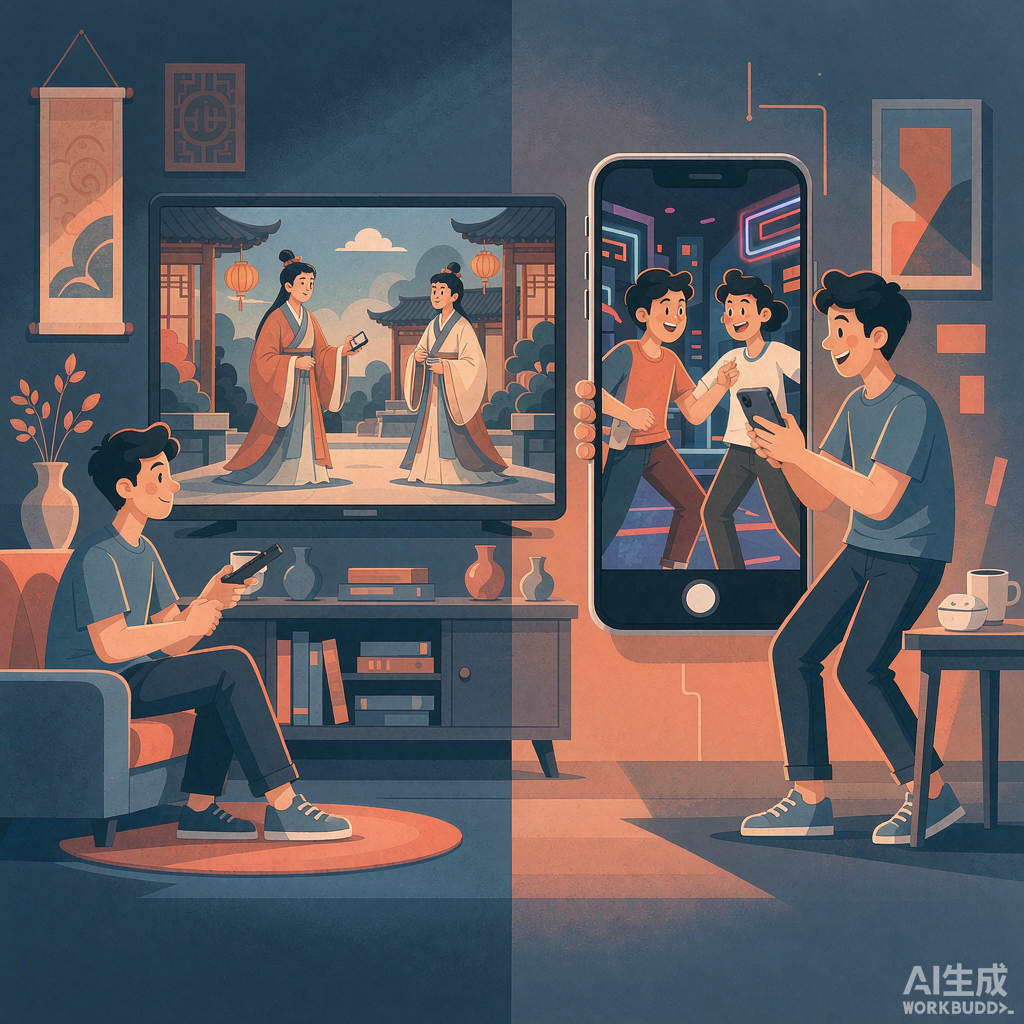
You've probably noticed it yourself: you can struggle to focus on a critically acclaimed hour-long drama, but somehow find yourself 40 episodes deep into a trashy vertical drama without realizing how you got there. What's going on?
The answer isn't that you have bad taste (you don't). It's that vertical dramas are precision-engineered for the way your brain actually works — in ways that traditional TV, for all its artistic merit, simply isn't. Let's break down the psychology of why the 2-minute fix is so hard to resist.
The Attention Economy: Competing for Scarce Resources
First, some context: your attention is a scarce resource, and it's under constant assault. The average person checks their phone 96 times a day. The average attention span has shrunk dramatically in the smartphone era. You're not broken — you're just living in an environment designed to fragment your focus.
Traditional TV asks a lot: an hour of your undivided attention, in a specific place (your couch), at a specific time (when you have an hour to spare). That's a big commitment, and it's one that many of us struggle to make, even for shows we genuinely love.
Vertical dramas ask almost nothing: 90 seconds, on your phone, whenever you have a spare moment. The barrier to entry is so low it's almost nonexistent. And once you're in, the format keeps you hooked.
The Dopamine Loop: Small Bets, Frequent Payoffs
Here's where the neuroscience gets interesting. Your brain's reward system is driven by dopamine, a neurotransmitter that's released not just when you experience pleasure, but when you anticipate it. And crucially, dopamine responds most strongly to variable rewards — payoffs that are unpredictable in timing and size.
Traditional TV delivers dopamine in a slow, steady drip: character development, gradual plot progression, a climax after 40 minutes of buildup. It's satisfying, but it's not optimized for the brain's reward system.
Vertical dramas are a dopamine slot machine. Every 90 seconds, you get a hit: a revelation, a confrontation, a cliffhanger. The rewards come fast and frequently, and they're variable — you never know exactly when the big payoff is coming. This keeps your brain in a constant state of anticipation, which is exactly what drives compulsive engagement.
The Zeigarnik Effect: The Torture of Incompletion
Remember the Zeigarnik effect from our article on micro-drama monetization? It's the psychological principle that your brain hates unfinished business. An unresolved narrative creates genuine psychological tension that can only be relieved by resolution.
Traditional TV uses this effect too (every episode ends on some kind of cliffhanger), but the resolution is delayed — you have to wait a week for the next episode, or at least until you have another hour to spare.
Vertical dramas weaponize the Zeigarnik effect at a much higher frequency. Every 90 seconds, a new cliffhanger. Every 90 seconds, a new loop opened that your brain desperately wants to close. The resolution is always just one more episode away — and one more episode is only 90 seconds. The friction to continue is almost zero.
Cognitive Load: Easy vs Effortful Viewing
Traditional prestige TV is cognitively demanding. You need to track multiple storylines, remember character names and relationships, pay attention to subtle foreshadowing, interpret ambiguous themes. It's rewarding, but it's work.
Vertical dramas are cognitively effortless. The plots are simple, the characters are archetypes, the dialogue is expository. You don't need to think. You just need to feel.
This isn't a criticism — it's a feature. After a long day of work, childcare, commuting, and general life admin, your brain is tired. The last thing it wants is more cognitive work. Vertical dramas offer entertainment that requires zero mental effort, which is exactly what a depleted brain craves.
The Intimacy Factor: Faces, Close-Ups, and Emotional Connection
The vertical format itself contributes to the addiction. Traditional TV is shot in widescreen, with lots of environmental context, wide shots, and visual complexity. It's cinematic, but it's also distancing.
Vertical dramas are shot in portrait mode, with tight close-ups that fill the screen with faces. This creates a sense of intimacy that widescreen TV can't match. You're not watching characters from a distance; you're right there with them, seeing every micro-expression, every flicker of emotion.
This intimacy triggers the same psychological responses as face-to-face interaction. Your brain processes these on-screen faces almost as if they were real people, which creates a stronger emotional connection — and a stronger compulsion to keep watching.
The Completion Bias: The Joy of Finishing Things
Humans have a deep-seated psychological need for completion. We like finishing things. It gives us a sense of accomplishment and closure.
Finishing a traditional TV series is a major undertaking. Even a short season is 8-10 hours. Finishing a vertical drama is much more achievable — the total runtime is often comparable to a feature film, but it's broken into tiny, manageable chunks. You can finish a whole series in a weekend, or a week of commutes.
This makes vertical dramas uniquely satisfying for completionists. You get the dopamine hit of finishing something much more frequently than you do with traditional TV.
The Social Proof: FOMO and Cultural Participation
Finally, there's the social dimension. When everyone on your TikTok feed is talking about the latest viral vertical drama, there's a powerful pressure to participate. You want to be in on the conversation, to understand the memes, to have an opinion.
Traditional TV has this too (remember when everyone was talking about Game of Thrones?), but the barrier to participation is higher. You need to find 60+ hours to catch up. With vertical dramas, you can be caught up in a weekend.
So Is This... Bad?
Is all this psychological engineering a bad thing? It depends on your perspective.
On one hand, vertical dramas are designed to be addictive, and they can absolutely lead to compulsive viewing and overspending. The psychological tactics are the same ones used by slot machines and social media — and they work for the same reasons.
On the other hand, vertical dramas provide genuine entertainment value to millions of people, in a format that fits their lives. They're not trying to replace traditional TV; they're filling a different niche. And for many viewers, the ability to enjoy a story in 90-second increments is a feature, not a bug.
The key is awareness. Understanding why vertical dramas are so addictive doesn't make them less addictive — but it does give you the knowledge to make conscious choices about your viewing habits, rather than being passively manipulated by the format.
The Bottom Line
Your brain loves vertical dramas because they're perfectly designed for the way your brain works: low commitment, high reward, frequent payoffs, minimal cognitive load, maximum intimacy. Traditional TV can't compete on those terms — but it was never trying to.
The two formats aren't in competition. They're serving different needs, different moods, different contexts. Sometimes you want the slow-burn satisfaction of prestige TV. Sometimes you want the instant gratification of a 90-second cliffhanger. Both are valid. Both have their place.
The trick is knowing which one you need — and not letting the 2-minute fix crowd out everything else.
More in Guides
Where to Watch Chinese Short Dramas (Legally) in 2026
ReelShort, DramaBox, GoodShort, YouTube official channels — there are more legal ways to watch vertical dramas than ever. Here's a complete guide to the best platforms, what they cost, and which one is right for you.

10 Tropes You'll See in Every Short Drama (And Why They Work So Well)
Secret billionaires. Contract marriages. Reborn heroines out for revenge. If you're new to vertical dramas, these 10 tropes are the alphabet of the genre — here's what they are, why they're everywhere, and which ones are actually worth your time.
Short Drama Starter Pack: 5 Perfect First Shows for Beginners
Never watched a vertical drama before? These 5 shows are the perfect entry point — one for every taste, from sweet romance to trashy fun to genuine quality. Start here.